
The Pipeline Paradox: Why Your Marketing Campaigns Are Growing But Revenue Isn’t
Every quarter the dashboard looks better. Impressions climb. Email open rates climb. Social engagement climbs. Then the sales team asks the only question that matters. Where is the pipeline. This is the pipeline paradox, and it is quietly costing growth focused companies their most valuable resource: time.
The Activity Trap
Marketing teams are rewarded for output because output is easy to measure. A new landing page, a content calendar, a webinar series. Each of these is a real piece of work, but none of them are revenue. Somewhere between the campaign launch and the closed deal, a translation has to happen, and in most organizations nobody owns that translation.
This is what separates marketing activity from marketing as a revenue function. Activity asks whether the work got done. Revenue asks whether the work moved a customer closer to a purchase decision. Those are different questions, and a business that only tracks the first one will keep mistaking motion for progress.
Where the Gap Actually Lives
In our work across enterprise GTM programs, the disconnect almost always shows up
in the same three places.
- Targeting that is too broad. Campaigns built for everyone convert no one. Without a sharp definition of the customer and the trigger event that puts them in the market, even excellent creative work will underperform.
- No system between marketing and sales. Leads are generated, but there is no defined handoff, no scoring, and no shared definition of what counts as sales ready. The lead sits in a queue while urgency fades.
- Vanity metrics replacing pipeline metrics. Click through rate and follower growth feel good in a meeting, but they rarely correlate with bookings. Without a direct line from a metric to a dollar, teams optimize for the wrong outcome.
What Revenue Minded Marketing Looks Like
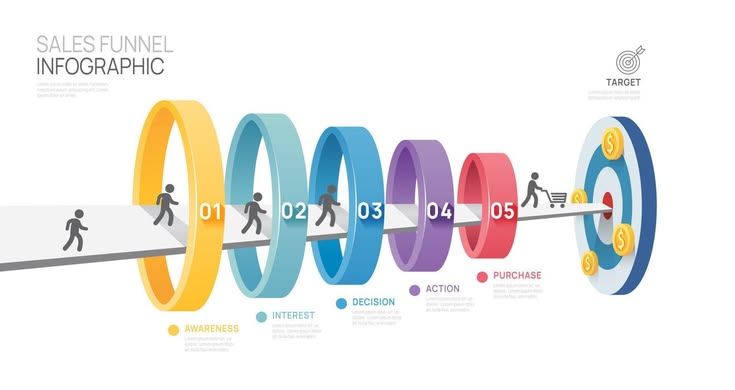
A revenue function treats every campaign as the front end of a system, not a standalone project. That means defining the ideal customer before the first asset is built, mapping the customer journey to specific content and outreach at each stage, and agreeing with sales on what a qualified opportunity actually looks like before a single email goes out.
It also means reporting differently. Instead of leading a board update with impressions, a revenue minded marketing leader leads with pipeline generated, conversion rate by stage, and cost per opportunity. The activity metrics still get tracked, but they support the revenue story rather than replacing it.
Three Questions Every Leadership Team Should Ask
- Can we trace this campaign to a specific dollar figure in the pipeline.
- If we doubled this activity tomorrow, would pipeline actually grow, or would we just be busier.
- Does our sales team trust the leads we hand them, and can they tell us why or why not.
If those questions are hard to answer today, that is not a failure of the marketing team. It is a signal that the system connecting strategy to execution has a gap, and that gap is exactly where a fractional CMO earns their seat at the table.